
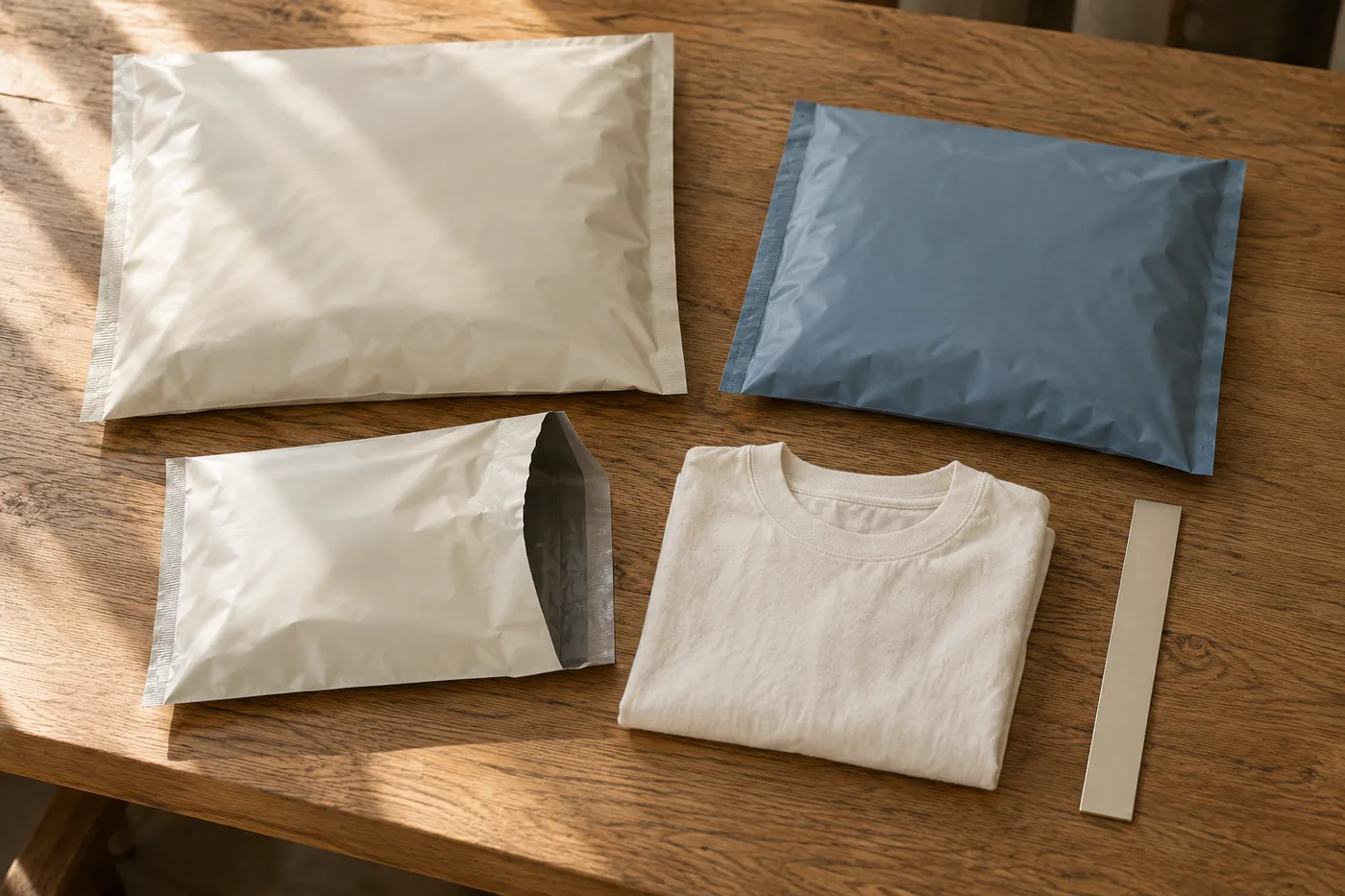
I approach a shipping bag as the last part of an order, not the first thing to buy. A soft shirt, a sharp-edged accessory, and a delicate print may weigh similarly, yet they ask very different things of a package. The useful question is not whether a poly mailer is popular. It is whether the complete packed order can travel in a flexible outer without the bag becoming its only protection. This journal sets out a decision method rather than a ranking based on tests we have not performed.
Avery Vale is our fictional, AI-assisted editorial identity. The scenes here are AI-generated illustrations, not photographs of a testing program. I use the first-person voice to make the reasoning readable, not to imply personal warehouse experience. Specifications, current carrier rules, and the seller's own samples still need checking. The aim is a smaller, more understandable set of packaging choices that can be repeated without improvising at the end of every sale.
Start with the order, then compare the options
For a product shortlist alongside this framework, the poly mailer options for marketplace and independent-store orders offer another starting point. Treat a shortlist as a way to locate candidates, not as proof that a listed bag fits your exact item. Before placing a bulk order, look for the supplier's internal dimensions, closure arrangement, material description, pack quantity, and any stated limits. A listing photograph rarely tells you how much space the seal needs after a thick garment goes inside.
Etsy, eBay, and Shopify orders do not automatically require different bags. What changes is the combination of item, packing routine, customer expectation, and shipping service. A handmade knit sold through a marketplace may need the same basic outer as a similar garment sold through a store. A collectible sold on either channel may need a rigid container. Keep platform-specific order details in the dispatch workflow; keep physical protection decisions tied to the object being sent.
Write one sentence for each common order family. For example, describe a folded soft garment with no rigid embellishments, or a fabric bundle with a protected accessory. Include the heaviest ordinary variant and the largest typical combination. These descriptions reveal whether a bag is a reasonable candidate and stop a broad phrase such as small items from hiding awkward corners. If the description includes crushing, bending, leakage, sharp points, or breakage, address that risk before selecting an outer.
Give flexible packaging a clear job
An unpadded poly mailer provides an outer enclosure. It can help keep loose contents together and separate an order from incidental grime, but it does not create a rigid shell. Film thickness and closure quality matter, yet neither turns a bag into a box. Delicate contents may need a different packaging system altogether. A padded bag introduces some cushioning, but that also changes thickness, usable space, weight, and disposal considerations. Choose the role explicitly rather than treating every bag-shaped package as interchangeable.
Soft goods are often a sensible place to begin because they can accommodate gentle shape changes. Even there, inspect the contents. A zip pull, metal clasp, stiff hangtag, or exposed fastener may concentrate pressure on a small area. An inner sleeve can organize a garment, but it is not a substitute for isolating a hard point. Do not force a solution because you already have a carton of bags on the shelf. The cost of unsuitable stock is a purchasing lesson, not a reason to ship a vulnerable order.
A bag also needs to work after packing. It should leave a relatively flat label area, a closure that is not under constant tension, and a form the chosen service accepts. Packaging may look compact on the bench while presenting an unstable surface for scanning. If a normal fold makes the bag bulge into an irregular shape, reconsider the fold or move to the next appropriate size. Smooth handling is more useful than achieving the smallest possible outline at any cost.
Compare by reader job, not by color
The comparison below is a planning aid, not measured performance data. Each row describes a packaging type and the question it raises. Supplier claims still need scrutiny. Recycled content, strength, opacity, and reusability are separate characteristics; one does not establish the others. A plain bag with reliable fit may be easier to manage than a decorative option with poorly explained dimensions.
On a narrow screen, swipe the table or focus it and use the arrow keys to reach all columns.
| Type | Useful starting role | What to verify | Boundary |
|---|---|---|---|
| Plain poly outer | Enclose suitable soft goods | Usable fit, seams, flap and label surface | No rigid support or built-in cushioning |
| Second-strip mailer | Possible reuse when condition permits | Opening path and actual return strip | Not a return policy or durability guarantee |
| Padded flexible mailer | Enclose an appropriately selected cushioned order | Construction and item-specific suitability | Not automatically suitable for fragile or bend-sensitive goods |
| Rigid mailer or box | Support orders that need another system | Complete protective arrangement and service rules | Choose around the item, not just its weight |
A lightweight outer might be sufficient for one order family and wrong for another. There is no universal best thickness in this framework because material formulation, seams, dimensions, and handling all contribute to the outcome. Ask what the manufacturer states and what your sample actually shows. Avoid converting a vague term such as premium into a technical requirement. Keep a note of the product reference so a later reorder does not accidentally substitute a different construction with the same color.
Color has a practical side when it makes stock easy to distinguish or keeps private contents from being plainly visible. It also has limits. An opaque bag is not evidence of tamper resistance, and a printed design is not evidence of adequate protection. If branding matters to you, decide it after fit and closure. A consistent plain package is preferable to a distinctive package that needs repeated rescue with extra tape or leaves the address across a crease.
Size a packed sample before buying a case
Measure the order in its actual packed form. Include any inner sleeve, fold, tag, or protective piece that will travel with it. Flat bag dimensions cannot be compared directly with an object's footprint when the object has depth. A thick sweater consumes width as the film rises around its sides. The closure flap needs its own working space. Our fit guide explains how to record these observations without inventing a universal sizing formula.
Try the sample with the normal item and with the largest routine variant. Insert the contents without stretching the seams, arrange them as they will ship, and close the flap without pulling hard. Watch for corners pressing into the film and a label zone that turns into a dome. If the bag works only when packed by one unusually careful person, it may be a poor standard choice. A little workable slack can be more repeatable than a perfectly tight photograph.
Keep the supplier's stated dimensions separate from the sample's observed usable space. Record units, whether the flap is included, and which measurement belongs to the opening. A number copied without its definition invites a bad reorder. Do not cut open a bag and use that altered size as your normal fit reference. Instead, label a retained unopened sample in your own stock notes and compare new batches against the same order family.
Build a closure routine that exposes mistakes
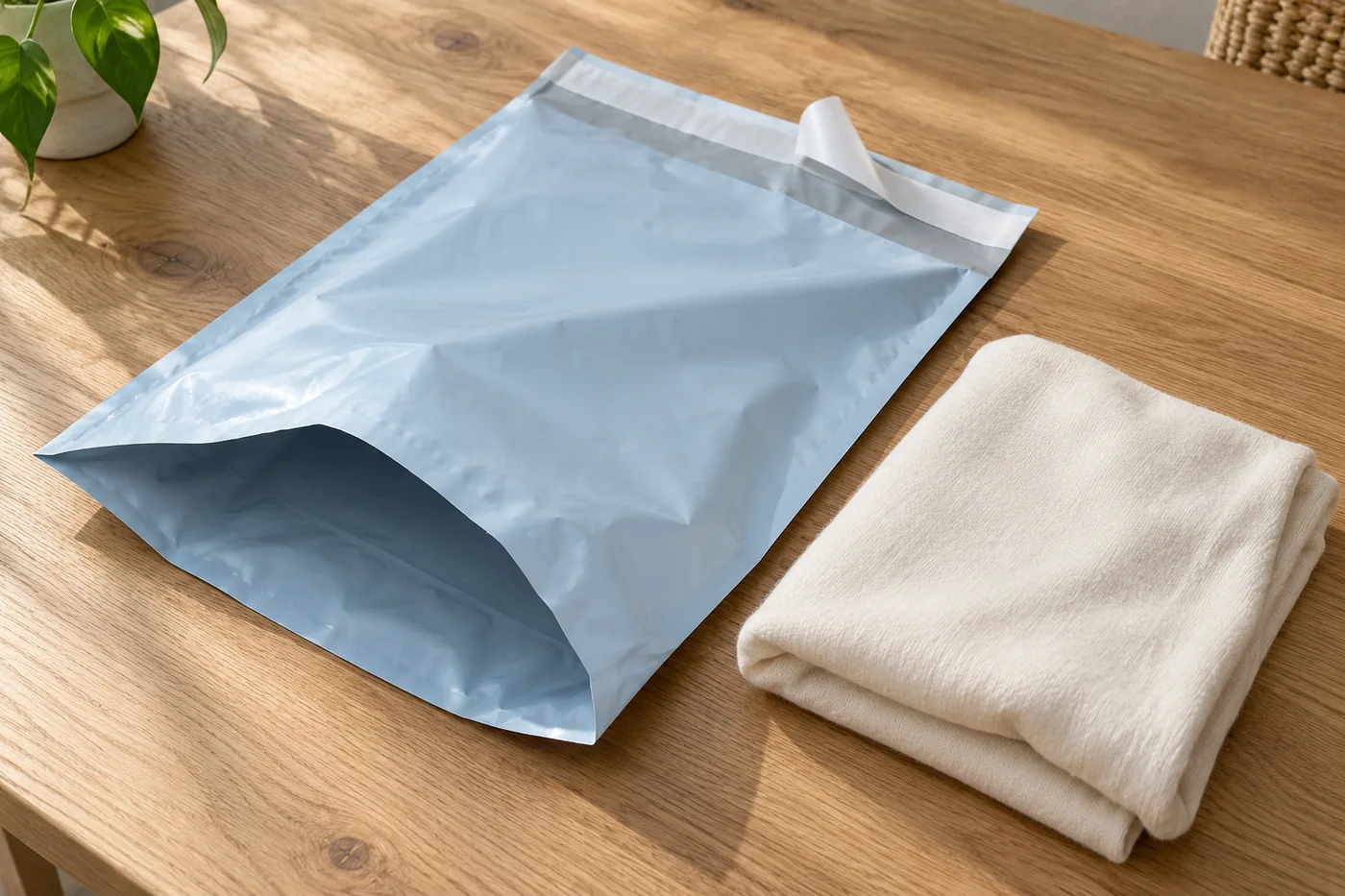
A pressure-sensitive closure is most useful when the packing process lets it bond as intended. Read the supplier's guidance for storage, application conditions, and handling. Dust, a folded liner, or material caught in the seal can change the result. Our closure guide separates the visible inspection from claims that would require controlled testing. We do not promise waterproof shipping or a particular holding force.
Arrange the bench so the operator can see the complete flap. Keep the release liner away from the adhesive and from loose contents. Once the order is aligned, close the bag smoothly and inspect the seal path. Look for a flap folded onto itself, a gap at a corner, or fabric interfering with contact. Extra tape may address a particular packaging requirement, but it should not become the automatic answer to a bag that consistently fails to close cleanly.
An outer closure also affects arrival. Customers should be able to find a sensible opening route without having to cut near the item. A return strip, where genuinely provided, must remain unused during outbound packing if the customer is meant to use it later. Explain this in your own instructions only when the actual bag supports it. The returns guide covers the distinction between opening convenience, possible reuse, and an authorized return shipment.
Keep labels flat and exceptions visible
A readable address is not just a text problem. The label needs a suitable surface and an application method that suits the film and adhesive. Place it where ordinary handling will not fold a barcode around an edge. Keep closures and seams out of the main scanning area. Test the combination of your printer, label stock, bag surface, and service instructions on a sample; none of those pieces proves the others work. The labels guide focuses on this interaction.
Do not hide uncertain orders in a fast-moving batch. Give exceptions a separate place on the bench: a combination that no standard size handles, a damaged bag, or an address that needs resolution through the actual sales channel. The package should wait until the issue is resolved. This is a workflow principle, not a recommendation to store customer data in this site. Use the shop's existing authorized order system and avoid writing private details on packaging stock notes.
Make a small stock system before expanding
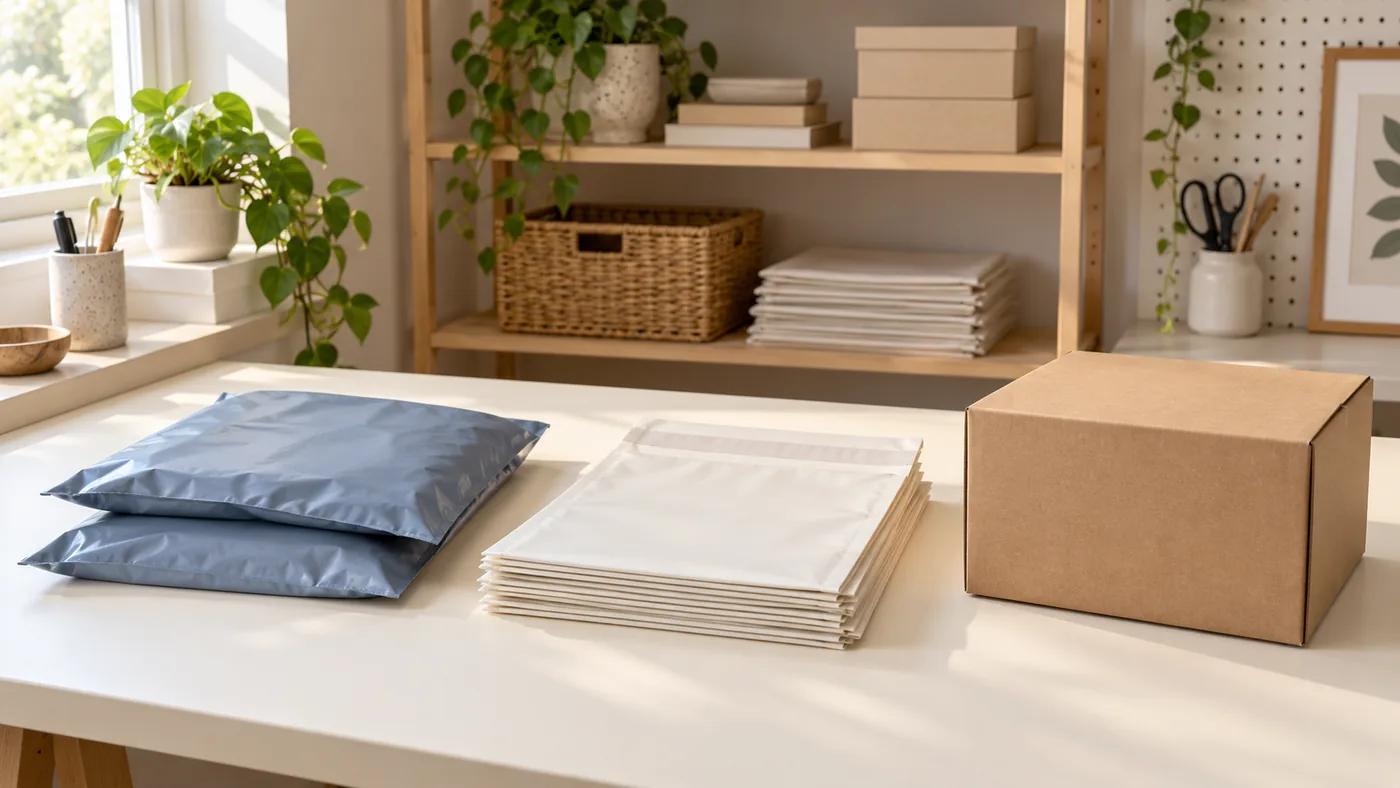
A useful starting stock set has named roles: the ordinary soft-order bag, a larger bag for defined combinations, and an alternative protective container for unsuitable items. It need not include every available size. If two bags cover nearly the same job, compare whether both earn shelf space. Keep an exception record so the decision is informed by actual orders rather than a vague feeling that something bigger might be needed someday.
Our stock guide describes a simple count and reorder routine. Watch usable stock rather than the nominal quantity on a purchase invoice. Misprinted labels, torn film, poor storage, and trial packing can reduce what is ready to dispatch. Keep packaging purchasing separate from the promise you make to a customer about shipping time. A reorder estimate is not a guaranteed delivery date, and a bag shortage does not justify an unsafe substitute.
A final bench decision
Before choosing a bag, answer five questions: is the item suitable for flexible packaging; does the complete order fit without stressing the closure; is any vulnerable component separately protected; is the label flat and readable; and is the arrival or return plan honest about what the package can do? If a question remains unclear, pause and work through the relevant guide rather than disguising uncertainty with more decorative material.
I favor a repeatable system over a supposedly perfect individual pack. The strongest choice is the one that can be explained in ordinary language, checked with the right sample, and reordered by a specific reference. Keep marketing adjectives out of the packing rule. Keep fragile items out of a flexible-only solution. Then use your own order experience to refine a small set of standards, while remembering that this editorial framework is a starting point rather than a certification of any particular mailer.
Before the order leaves the bench
- Confirm flexible packaging suits the contents.
- Check complete fit and the clean closure path.
- Protect hard points and use the right alternative for vulnerable goods.
- Keep the address readable and old information out of view.
- Use opening and reuse instructions that match the actual bag.